Little Red Riding Hood
Hansel and Gretel
Showing posts with label Brother Grimms. Show all posts
Showing posts with label Brother Grimms. Show all posts
Friday, May 14, 2010


Thursday, April 29, 2010
Rapunzel | Brothers Grimm
There were once a man and his wife who had long in vain wished for a child.
Every day they pray to God for a child.
Several months later, their hopes were answered.
One day, when his wife was looking at the her neighbor foliage green, he suddenly wanted to eat the leaves named rapunzel. The leaf color is really tempting, green and fresh. The wife's desire is increasingly strong that the wife fell ill.
The husband was worried about his wife, he promised to reciting the rapunzel leaves despite knowing the dangers into the witch's garden. At sunset, the husband secretly took Rapunzel to his wife and leaves home as soon as possible. That night, his wife can enjoy the delicious leaves Rapunzel. However, the wife still wants to eat the leaves of rapunzel. The husband was forced to return to the garden witch to take leaves of Rapunzel.
"HEY!! Apparently you who stole my Rapunzel foliage! You must be PUNISHED!" the screams of the witch made him fall.
"Sorry! Forgive me .., I am doing this because my wife's pregnancy .. please forgive me .."
"Ooo, your wife is pregnant?" said the witch with her smirk.
"Well, your wife may eat as much as possible my rapunzel leaves, but ... once the baby is born, you should be handed OVER TO ME. I'll take care of them like her own child. "
Because so scared, the husband agrees. Because so scared, the husband agrees. When their baby is born, the witch took her, and named Rapunzel. Rapunzel grew into a beautiful girl, but her beauty made her ill-fated. At the age of twelve years, Rapunzel's tower was moved to a very high so that no young man who saw her and wanted marry her.
The tower was placed in the middle of dense forest, with no door, no stairs, only a window on top of the tower. When the witch come, she will said,
"RAPUNZEL, RAPUNZEL,
Let down thy hair to me."
Hearing that voice, Rapunzel lowers her hair and the witch would climb up with the hair. Rapunzel lived many years in this way with no one to help her.
One day, a prince rode through the forest. He heard a loud and melodious songs, the prince became interested. Prince looking for original sound and ended in Rapunzel's tower. None of the doors looked there, the prince became disappointed. But every evening he was always taking the time to visit the tower and heard Rapunzel singing. When the prince enjoys Rapunzel's voice, the witch comes and says,
"RAPUNZEL, RAPUNZEL,
Let down thy hair to me."
Rapunzel's golden long hair also offered. Viewing witch was climbing, the prince intends to try it tomorrow. Tomorrow, the prince returns and said louder,
"RAPUNZEL, RAPUNZEL,
Let down thy hair to me."
Rapunzel's golden long hair also offered. The prince climbed quickly, Rapunzel was surprised to see other people entering the prison. Though shocked, Rapunzel will be happy prince said a good word, they become a friend. Prince has always come without a known witch, until one day the prince want her to be his wife. Rapunzel very glad and sad hear that, she could not get out of the tower.
Then They think of an idea, the prince would bring silk every visit day and Rapunzel will weave it into a strong rope to be dropped from a tower. That plan was going well until one day, Rapunzel complained of damaged hair to the witch,
"Grandma treat my hair was so rough, not like my Prince!
Hear that, the wicth became angry and cut Rapunzel long hair. With her spell, Rapunzel deported to distant place. And she waited.
"RAPUNZEL, RAPUNZEL,
Let down thy hair to me."
The prince said in a loud, Rapunzel's golden long hair also offered. Prince was shocked by the sight, the witch!
"Hey! Are you looking for your canary? He has eaten a cat, and now the cat will make you blind!!"
Immediately the eyes of the prince became blind and fell down from tower.
The prince fainted in a long time. After woke up and could stand, he was adventurous seeking Rapunzel. He passed the woods, calling the name of Rapunzel. Without food and drink except for dew and tree roots, he kept walking, walking, and walking.
He does not know how many forests,
how many days, and
how much distance he had traveled to find Rapunzel.
Until he arrived in a quiet area, there was a loud and melodious song,
she was Rapunzel!
Rapunzel saw the prince and ran to hug him, his body was thin and unkempt. Seeing the eyes of the blind prince, Rapunzel's tears. Apparently, Rapunzel's tears make the prince's eyes could see again.
Eventually they live happily ever after in the area was deserted with their children.
Every day they pray to God for a child.
Several months later, their hopes were answered.
One day, when his wife was looking at the her neighbor foliage green, he suddenly wanted to eat the leaves named rapunzel. The leaf color is really tempting, green and fresh. The wife's desire is increasingly strong that the wife fell ill.
The husband was worried about his wife, he promised to reciting the rapunzel leaves despite knowing the dangers into the witch's garden. At sunset, the husband secretly took Rapunzel to his wife and leaves home as soon as possible. That night, his wife can enjoy the delicious leaves Rapunzel. However, the wife still wants to eat the leaves of rapunzel. The husband was forced to return to the garden witch to take leaves of Rapunzel.
"HEY!! Apparently you who stole my Rapunzel foliage! You must be PUNISHED!" the screams of the witch made him fall.
"Sorry! Forgive me .., I am doing this because my wife's pregnancy .. please forgive me .."
"Ooo, your wife is pregnant?" said the witch with her smirk.
"Well, your wife may eat as much as possible my rapunzel leaves, but ... once the baby is born, you should be handed OVER TO ME. I'll take care of them like her own child. "
Because so scared, the husband agrees. Because so scared, the husband agrees. When their baby is born, the witch took her, and named Rapunzel. Rapunzel grew into a beautiful girl, but her beauty made her ill-fated. At the age of twelve years, Rapunzel's tower was moved to a very high so that no young man who saw her and wanted marry her.
The tower was placed in the middle of dense forest, with no door, no stairs, only a window on top of the tower. When the witch come, she will said,
"RAPUNZEL, RAPUNZEL,
Let down thy hair to me."
Hearing that voice, Rapunzel lowers her hair and the witch would climb up with the hair. Rapunzel lived many years in this way with no one to help her.
One day, a prince rode through the forest. He heard a loud and melodious songs, the prince became interested. Prince looking for original sound and ended in Rapunzel's tower. None of the doors looked there, the prince became disappointed. But every evening he was always taking the time to visit the tower and heard Rapunzel singing. When the prince enjoys Rapunzel's voice, the witch comes and says,
"RAPUNZEL, RAPUNZEL,
Let down thy hair to me."
Rapunzel's golden long hair also offered. Viewing witch was climbing, the prince intends to try it tomorrow. Tomorrow, the prince returns and said louder,
"RAPUNZEL, RAPUNZEL,
Let down thy hair to me."
Rapunzel's golden long hair also offered. The prince climbed quickly, Rapunzel was surprised to see other people entering the prison. Though shocked, Rapunzel will be happy prince said a good word, they become a friend. Prince has always come without a known witch, until one day the prince want her to be his wife. Rapunzel very glad and sad hear that, she could not get out of the tower.
Then They think of an idea, the prince would bring silk every visit day and Rapunzel will weave it into a strong rope to be dropped from a tower. That plan was going well until one day, Rapunzel complained of damaged hair to the witch,
"Grandma treat my hair was so rough, not like my Prince!
Hear that, the wicth became angry and cut Rapunzel long hair. With her spell, Rapunzel deported to distant place. And she waited.
"RAPUNZEL, RAPUNZEL,
Let down thy hair to me."
The prince said in a loud, Rapunzel's golden long hair also offered. Prince was shocked by the sight, the witch!
"Hey! Are you looking for your canary? He has eaten a cat, and now the cat will make you blind!!"
Immediately the eyes of the prince became blind and fell down from tower.
The prince fainted in a long time. After woke up and could stand, he was adventurous seeking Rapunzel. He passed the woods, calling the name of Rapunzel. Without food and drink except for dew and tree roots, he kept walking, walking, and walking.
He does not know how many forests,
how many days, and
how much distance he had traveled to find Rapunzel.
Until he arrived in a quiet area, there was a loud and melodious song,
she was Rapunzel!
Rapunzel saw the prince and ran to hug him, his body was thin and unkempt. Seeing the eyes of the blind prince, Rapunzel's tears. Apparently, Rapunzel's tears make the prince's eyes could see again.
Eventually they live happily ever after in the area was deserted with their children.
Monday, April 19, 2010
The Little Glass Slipper| Origin of Cinderella's Slippers
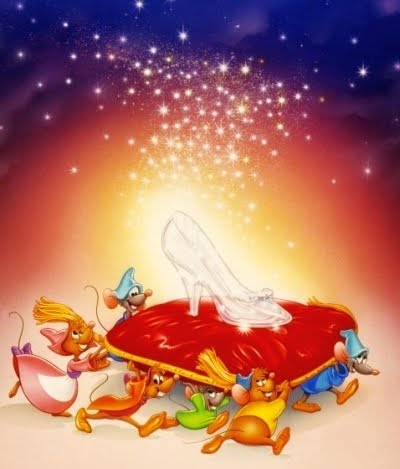
Disney's Cinderella| glass slipper
The glass slippers are unique to Perrault. Some have hypothesized the verre (glass) of the title was a mistake for vair (fur). The Encylopaedia Brittanica printed this and many have quoted it since. However, most scholars believe that glass was really intended. It is important that the slippers be rigid and unstretchable, and fur could stretch to fit other feet. Glass would also allow the fit of the shoe to be seen. At the time of Perrault, glass was very rare and valuable, worth even more than gold.


This shoe come from 1600s, left 1660 right 1650, if hypothesized about vair and verre is correct, may be Cinderella's slipper would be like this or squirell fur version.
Ye Xien tales from China told that slipper made of gold thread and solid gold soles. Ye Xien tales come from Tang Dynasty, and based on the fact that foot binding come from Tang dynasty....may be Ye Xien use this shoes...^^

Scottish Cinderella story use rushes slipper, Egyptian Cinderella( Rosy Rhodopis) has gold slippers. In the German version they’re embroidered with silk and gold thread. In India, it's her nose-ring.
Saturday, April 17, 2010
Original Cinderella of the World
Cinderella is one of the most well known stories in the world.
There are more than 1500 versions of the story and almost every culture has one. The earliest recorded tale comes from China in the middle of the ninth century. The story appeared in Miscellaneous Morsels from Youyang, a book dating from the Tang dynasty (618-907 A.D.). The author was Tuan Cheng-Shih. Yeh-shen is the heroine and, she doesn't have a fairy godmother, there is a magical fish to help her and a golden slippers identifies her to the prince. Some reference call Chinese Cinderella with Yeh Hsien or Ye Xien.
Perrault's Cinderella (1697) is the popular version. The popularity of his tale was due to his additions to the story including the pumpkin, the fairy-godmother and the introduction of glass slippers. It was widely believed that in Perrault's version, Cinderella wore fur boots ("pantoufle en vair"), and that when the story was translated into English, vair was mistaken for verre (glass), resulting in glass slippers and that the story has remained this way ever since.However, the "fur theory" has since been disproven.

The Brothers Grimm's german version, Ashenputtel or Aschenbrödel(1812), does not have a fairy godmother. The girl plants a tree on the grave of her mother and magical help comes in the form of a dove.

The Scottish Cinderella known as Critheanach with het step sister Geal and Donn.
In Korea, Cinderella known as Kongji, who was mistreated by her stepmother and sister. She goes to a feast prepared by the town's "mayor," and meets his son, with predictable results.
Another early story of the Cinderella type came from Japan, involving Chūjō-hime, who runs away from her evil stepmother with the help of Buddhist nuns, and she joins their convent.
There is also Anne de Fernandez, a tale of the medieval Philippines. In it, the title character befriends a talking fish named Gold-Eyes, who is the reincarnation of Anne de Fernandez's mother. Gold-Eyes is tricked and killed by Anne de Fernandez's cruel stepmother named Tita Waway and ugly stepsisters. They eat Gold-Eyes for supper after sending Anne de Fernandez on an errand across the forest, then show Anne Gold-Eyes' bones when she returns. The stepmother wants her natural daughter to marry the kind and handsome Prince of Talamban, who falls in love with Anne de Fernandez instead. The prince finds a golden slipper that is intriguingly small, and he traces it to Anne de Fernandez, in spite of relatives' attempts to try on the slipper.
Italian version is La gatta cenerentola (The Cat Cinderella) with real name Zenzolla.
Egyptian Cinderella version is Rhodopis(the rosy-cheeked), she had been kidnapped by pirates as a child from her home in the north of Greece and sold into slavery. Her rich employer had many slaves, and one of her fellow slaves was a little old man called Aesop, who was kind and told her stories and fables about birds, animals and humans. But her master wished to make more money so he sent her to the rich Naucratis to be sold. for complete story read here.
 Shakuntala, is Cinderella from India. Shakuntala based on Sanskrit epic poem the Mahabarata.
And the perfect ending surely lived happily ever after....
Different version from different culture make different attribute fo Cinderella, especially the little glass slipper, the main attribute of Cinderella.
There are more than 1500 versions of the story and almost every culture has one. The earliest recorded tale comes from China in the middle of the ninth century. The story appeared in Miscellaneous Morsels from Youyang, a book dating from the Tang dynasty (618-907 A.D.). The author was Tuan Cheng-Shih. Yeh-shen is the heroine and, she doesn't have a fairy godmother, there is a magical fish to help her and a golden slippers identifies her to the prince. Some reference call Chinese Cinderella with Yeh Hsien or Ye Xien.
Perrault's Cinderella (1697) is the popular version. The popularity of his tale was due to his additions to the story including the pumpkin, the fairy-godmother and the introduction of glass slippers. It was widely believed that in Perrault's version, Cinderella wore fur boots ("pantoufle en vair"), and that when the story was translated into English, vair was mistaken for verre (glass), resulting in glass slippers and that the story has remained this way ever since.However, the "fur theory" has since been disproven.

Disney's Cinderella based on Perrault's Cinderella story.
The Brothers Grimm's german version, Ashenputtel or Aschenbrödel(1812), does not have a fairy godmother. The girl plants a tree on the grave of her mother and magical help comes in the form of a dove.

Ashenputtel by Arthur Rackham
The Scottish Cinderella known as Critheanach with het step sister Geal and Donn.
In Korea, Cinderella known as Kongji, who was mistreated by her stepmother and sister. She goes to a feast prepared by the town's "mayor," and meets his son, with predictable results.
Another early story of the Cinderella type came from Japan, involving Chūjō-hime, who runs away from her evil stepmother with the help of Buddhist nuns, and she joins their convent.
There is also Anne de Fernandez, a tale of the medieval Philippines. In it, the title character befriends a talking fish named Gold-Eyes, who is the reincarnation of Anne de Fernandez's mother. Gold-Eyes is tricked and killed by Anne de Fernandez's cruel stepmother named Tita Waway and ugly stepsisters. They eat Gold-Eyes for supper after sending Anne de Fernandez on an errand across the forest, then show Anne Gold-Eyes' bones when she returns. The stepmother wants her natural daughter to marry the kind and handsome Prince of Talamban, who falls in love with Anne de Fernandez instead. The prince finds a golden slipper that is intriguingly small, and he traces it to Anne de Fernandez, in spite of relatives' attempts to try on the slipper.
Italian version is La gatta cenerentola (The Cat Cinderella) with real name Zenzolla.
Egyptian Cinderella version is Rhodopis(the rosy-cheeked), she had been kidnapped by pirates as a child from her home in the north of Greece and sold into slavery. Her rich employer had many slaves, and one of her fellow slaves was a little old man called Aesop, who was kind and told her stories and fables about birds, animals and humans. But her master wished to make more money so he sent her to the rich Naucratis to be sold. for complete story read here.

And the perfect ending surely lived happily ever after....
Different version from different culture make different attribute fo Cinderella, especially the little glass slipper, the main attribute of Cinderella.
Wednesday, March 24, 2010
La Belle au Bois Dormant |The Sleeping Beauty Part 2
The fairy condoled with his majesty, and approved of all he had done. Then, being a fairy of great common sense and foresight, she suggested that the princess, awakening after a hundred years in this ancient castle, might be a good deal embarrassed, especially with a young prince by her side, to find herself alone.
Accordingly, without asking any one’s leave, she touched with her magic wand the entire population of the palace–except the king and queen; governesses, ladies of honour, waiting-maids, gentlemen ushers, cooks, kitchen-girls, pages, footmen–down to the horses that were in the stables, and the grooms that attended them, she touched each and all. Nay, with kind consideration for the feelings of the princess, she even touched the little fat lap-dog, Puffy, who had laid himself down beside his mistress on her splendid bed. He, like all the rest, fell fast asleep in a moment. The very spits that were before the kitchen-fire ceased turning, and the fire itself went out, and everything became as silent as if it were the middle of the night, or as if the palace were a palace of the dead.
The king and queen–having kissed their daughter and wept over her a little, but not much, she looked so sweet and content–departed from the castle, giving orders that it was to be approached no more. The command was unnecessary; for in one quarter of an hour there sprung up around it a wood so thick and thorny that neither beasts nor men could attempt to penetrate there. Above this dense mass of forest could only be perceived the top of the high tower where the lovely princess slept.
A great many changes happen in a hundred years. The king, who never had a second child, died, and his throne passed into another royal family. So entirely was the story of the poor princess forgotten, that when the reigning king’s son, being one day out hunting and stopped in the chase by this formidable wood, inquired what wood it was and what were those towers which he saw appearing out of the midst of it, no one could answer him. At length an old peasant was found who remembered having heard his grandfather say to his father, that in this tower was a princess, beautiful as the day, who was doomed to sleep there for one hundred years, until awakened by a king’s son, her destined bridegroom.
At this, the young prince, who had the spirit of a hero, determined to find out the truth for himself. Spurred on by both generosity and curiosity, he leaped from his horse and began to force his way through the thick wood. To his amazement the stiff branches all gave way, and the ugly thorns sheathed themselves of their own accord, and the brambles buried themselves in the earth to let him pass. This done, they closed behind him, allowing none of his suite to follow: but, ardent and young, he went boldly on alone. The first thing he saw was enough to smite him with fear. Bodies of men and horses lay extended on the ground; but the men had faces, not death-white, but red as peonies, and beside them were glasses half filled with wine, showing that they had gone to sleep drinking.
Next he entered a large court, paved with marble, where stood rows of guards presenting arms, but motionless as if cut out of stone; then he passed through many chambers where gentlemen and ladies, all in the costume of the past century, slept at their ease, some standing, some sitting. The pages were lurking in corners, the ladies of honour were stooping over their embroidery frames, or listening apparently with polite attention to the gentlemen of the court, but all were as silent as statues and as immoveable. Their clothes, strange to say, were fresh and new as ever: and not a particle of dust or spider-web had gathered over the furniture, though it had not known a broom for a hundred years. Finally the astonished prince came to an inner chamber, where was the fairest sight his eyes had ever beheld.
A young girl of wonderful beauty lay asleep on an embroidered bed, and she looked as if she had only just closed her eyes. Trembling, the prince approached and knelt beside her. Some say he kissed her, but as nobody saw it, and she never told, we cannot be quite sure of the fact. However, as the end of the enchantment had come, the princess awakened at once, and looking at him with eyes of the tenderest regard, said drowsily, “Is it you, my prince? I have waited for you very long.”
Charmed with these words, and still more with the tone in which they were uttered, the prince assured her that he loved her more than his life. Nevertheless, he was the most embarrassed of the two; for, thanks to the kind fairy, the princess had plenty of time to dream of him during her century of slumber, while he had never even heard of her till an hour before. For a long time did they sit conversing, and yet had not said half enough. Their only interruption was the little dog Puffy, who had awakened with his mistress, and now began to be exceedingly jealous that the princess did not notice him as much as she was wont to do.
Meantime all the attendants, whose enchantment was also broken, not being in love, were ready to die of hunger after their fast of a hundred years. A lady of honour ventured to intimate that dinner was served; whereupon the prince handed his beloved princess at once to the great hall. She did not wait to dress for dinner, being already perfectly and magnificently attired, though in a fashion somewhat out of date. However, her lover had the politeness not to notice this, nor to remind her that she was dressed exactly like her royal grandmother, whose portrait still hung on the palace walls.
During the banquet a concert took place by the attendant musicians, and considering they had not touched their instruments for a century they played extremely well. They ended with a wedding march: for that very evening the marriage of the prince and princess was celebrated, and though the bride was nearly one hundred years older than the bridegroom, it is remarkable that the fact would never have been discovered by any one unacquainted therewith.
After a few days they went together out of the castle and enchanted wood, both of which immediately vanished, and were never more beheld by mortal eyes. The princess was restored to her ancestral kingdom, but it was not generally declared who she was, as during a hundred years people had grown so very much cleverer that nobody then living would ever have believed the story. So nothing was explained, and nobody presumed to ask any questions about her, for ought not a prince be able to marry whomsoever he pleases?
Nor–whether or not the day of fairies was over–did the princess ever see anything further of her seven godmothers. She lived a long and happy life, like any other ordinary woman, and died at length, beloved, regretted, but, the prince being already no more, perfectly contented.
Accordingly, without asking any one’s leave, she touched with her magic wand the entire population of the palace–except the king and queen; governesses, ladies of honour, waiting-maids, gentlemen ushers, cooks, kitchen-girls, pages, footmen–down to the horses that were in the stables, and the grooms that attended them, she touched each and all. Nay, with kind consideration for the feelings of the princess, she even touched the little fat lap-dog, Puffy, who had laid himself down beside his mistress on her splendid bed. He, like all the rest, fell fast asleep in a moment. The very spits that were before the kitchen-fire ceased turning, and the fire itself went out, and everything became as silent as if it were the middle of the night, or as if the palace were a palace of the dead.
The king and queen–having kissed their daughter and wept over her a little, but not much, she looked so sweet and content–departed from the castle, giving orders that it was to be approached no more. The command was unnecessary; for in one quarter of an hour there sprung up around it a wood so thick and thorny that neither beasts nor men could attempt to penetrate there. Above this dense mass of forest could only be perceived the top of the high tower where the lovely princess slept.
A great many changes happen in a hundred years. The king, who never had a second child, died, and his throne passed into another royal family. So entirely was the story of the poor princess forgotten, that when the reigning king’s son, being one day out hunting and stopped in the chase by this formidable wood, inquired what wood it was and what were those towers which he saw appearing out of the midst of it, no one could answer him. At length an old peasant was found who remembered having heard his grandfather say to his father, that in this tower was a princess, beautiful as the day, who was doomed to sleep there for one hundred years, until awakened by a king’s son, her destined bridegroom.
At this, the young prince, who had the spirit of a hero, determined to find out the truth for himself. Spurred on by both generosity and curiosity, he leaped from his horse and began to force his way through the thick wood. To his amazement the stiff branches all gave way, and the ugly thorns sheathed themselves of their own accord, and the brambles buried themselves in the earth to let him pass. This done, they closed behind him, allowing none of his suite to follow: but, ardent and young, he went boldly on alone. The first thing he saw was enough to smite him with fear. Bodies of men and horses lay extended on the ground; but the men had faces, not death-white, but red as peonies, and beside them were glasses half filled with wine, showing that they had gone to sleep drinking.
Next he entered a large court, paved with marble, where stood rows of guards presenting arms, but motionless as if cut out of stone; then he passed through many chambers where gentlemen and ladies, all in the costume of the past century, slept at their ease, some standing, some sitting. The pages were lurking in corners, the ladies of honour were stooping over their embroidery frames, or listening apparently with polite attention to the gentlemen of the court, but all were as silent as statues and as immoveable. Their clothes, strange to say, were fresh and new as ever: and not a particle of dust or spider-web had gathered over the furniture, though it had not known a broom for a hundred years. Finally the astonished prince came to an inner chamber, where was the fairest sight his eyes had ever beheld.
A young girl of wonderful beauty lay asleep on an embroidered bed, and she looked as if she had only just closed her eyes. Trembling, the prince approached and knelt beside her. Some say he kissed her, but as nobody saw it, and she never told, we cannot be quite sure of the fact. However, as the end of the enchantment had come, the princess awakened at once, and looking at him with eyes of the tenderest regard, said drowsily, “Is it you, my prince? I have waited for you very long.”
Charmed with these words, and still more with the tone in which they were uttered, the prince assured her that he loved her more than his life. Nevertheless, he was the most embarrassed of the two; for, thanks to the kind fairy, the princess had plenty of time to dream of him during her century of slumber, while he had never even heard of her till an hour before. For a long time did they sit conversing, and yet had not said half enough. Their only interruption was the little dog Puffy, who had awakened with his mistress, and now began to be exceedingly jealous that the princess did not notice him as much as she was wont to do.
Meantime all the attendants, whose enchantment was also broken, not being in love, were ready to die of hunger after their fast of a hundred years. A lady of honour ventured to intimate that dinner was served; whereupon the prince handed his beloved princess at once to the great hall. She did not wait to dress for dinner, being already perfectly and magnificently attired, though in a fashion somewhat out of date. However, her lover had the politeness not to notice this, nor to remind her that she was dressed exactly like her royal grandmother, whose portrait still hung on the palace walls.
During the banquet a concert took place by the attendant musicians, and considering they had not touched their instruments for a century they played extremely well. They ended with a wedding march: for that very evening the marriage of the prince and princess was celebrated, and though the bride was nearly one hundred years older than the bridegroom, it is remarkable that the fact would never have been discovered by any one unacquainted therewith.
After a few days they went together out of the castle and enchanted wood, both of which immediately vanished, and were never more beheld by mortal eyes. The princess was restored to her ancestral kingdom, but it was not generally declared who she was, as during a hundred years people had grown so very much cleverer that nobody then living would ever have believed the story. So nothing was explained, and nobody presumed to ask any questions about her, for ought not a prince be able to marry whomsoever he pleases?
Nor–whether or not the day of fairies was over–did the princess ever see anything further of her seven godmothers. She lived a long and happy life, like any other ordinary woman, and died at length, beloved, regretted, but, the prince being already no more, perfectly contented.
Tuesday, March 23, 2010
La Belle au Bois Dormant |The Sleeping Beauty Part 1
From “The Fairy Book” by Miss Mulock
Once there was a royal couple who grieved excessively because they had no children.
When at last, after long waiting, the queen presented her husband with a little daughter, his majesty showed his joy by giving a christening feast, so grand that the like of it was never known.
He invited all the fairies in the land–there were seven altogether–to stand godmothers to the little princess; hoping that each might bestow on her some good gift, as was the custom of good fairies in those days.
After the ceremony, all the guests returned to the palace, where there was set before each fairy-godmother a magnificent covered dish, with an embroidered table-napkin, and a knife and fork of pure gold, studded with diamonds and rubies.
But alas! as they placed themselves at table, there entered an old fairy who had never been invited, because more than fifty years since she had left the king’s dominion on a tour of pleasure, and had not been heard of until this day. His majesty, much troubled, desired a cover to be placed for her, but it was of common delf, for he had ordered from his jeweller only seven gold dishes for the seven fairies aforesaid.
The elderly fairy thought herself neglected, and muttered angry menaces, which were overheard by one of the younger fairies, who chanced to sit beside her. This good godmother, afraid of harm to the pretty baby, hastened to hide herself behind the tapestry in the hall. She did this, because she wished all the others to speak first–so that if any ill gift were bestowed on the child, she might be able to counteract it.
The six now offered their good wishes–which, unlike most wishes, were sure to come true. The fortunate little princess was to grow up the fairest woman in the world; to have a temper sweet as an angel; to be perfectly graceful and gracious; to sing like a nightingale; to dance like a leaf on a tree; and to possess every accomplishment under the sun. Then the old fairy’s turn came. Shaking her head spitefully, she uttered the wish that when the baby grew up into a young lady, and learned to spin, she might prick her finger with the spindle and die of the wound.
At this terrible prophecy all the guests shuddered; and some of the more tender-hearted began to weep. The lately happy parents were almost out of their wits with grief. Upon which the wise young fairy appeared from behind the tapestry, saying cheerfully “Your majesties may comfort yourselves; the princess shall not die. I have no power to alter the ill-fortune just wished her by my ancient sister–her finger must be pierced; and she shall then sink, not into the sleep of death, but into a sleep that will last a hundred years. After that time is ended, the son of a king will find her, awaken her, and marry her.”
Immediately all the fairies vanished.
The king, in the hope of avoiding his daughter’s doom, issued an edict, forbidding all persons to spin, and even to have spinning-wheels in their houses, on pain of instant death. But it was in vain. One day, when she was just fifteen years of age, the king and queen left their daughter alone in one of their castles, when, wandering about at her will, she came to an ancient donjon tower, climbed to the top of it, and there found a very old woman–so old and deaf that she had never heard of the king’s edict–busy with her wheel.
“What are you doing, good old woman?” said the princess.
“I’m spinning, my pretty child.”
“Ah, how charming! Let me try if I can spin also.”
She had no sooner taken up the spindle than, being lively and obstinate, she handled it so awkwardly and carelessly that the point pierced her finger. Though it was so small a wound, she fainted away at once, and dropped silently down on the floor. The poor frightened old woman called for help; shortly came the ladies in waiting, who tried every means to restore their young mistress, but all their care was useless. She lay, beautiful as an angel, the colour still lingering in her lips and cheeks; her fair bosom softly stirred with her breath: only her eyes were fast closed. When the king her father and the queen her mother beheld her thus, they knew regret was idle–all had happened as the cruel fairy meant.
But they also knew that their daughter would not sleep for ever, though after one hundred years it was not likely they would either of them behold her awakening. Until that happy hour should arrive, they determined to leave her in repose. They sent away all the physicians and attendants, and themselves sorrowfully laid her upon a bed of embroidery, in the most elegant apartment of the palace. There she slept and looked like a sleeping angel still.
When this misfortune happened, the kindly young fairy who had saved the princess by changing her sleep of death into this sleep of a hundred years, was twelve thousand leagues away in the kingdom of Mataquin. But being informed of everything, she arrived speedily, in a chariot of fire drawn by dragons. The king was somewhat startled by the sight, but nevertheless went to the door of his palace, and, with a mournful countenance, presented her his hand to descend.
Once there was a royal couple who grieved excessively because they had no children.
When at last, after long waiting, the queen presented her husband with a little daughter, his majesty showed his joy by giving a christening feast, so grand that the like of it was never known.
He invited all the fairies in the land–there were seven altogether–to stand godmothers to the little princess; hoping that each might bestow on her some good gift, as was the custom of good fairies in those days.
After the ceremony, all the guests returned to the palace, where there was set before each fairy-godmother a magnificent covered dish, with an embroidered table-napkin, and a knife and fork of pure gold, studded with diamonds and rubies.
But alas! as they placed themselves at table, there entered an old fairy who had never been invited, because more than fifty years since she had left the king’s dominion on a tour of pleasure, and had not been heard of until this day. His majesty, much troubled, desired a cover to be placed for her, but it was of common delf, for he had ordered from his jeweller only seven gold dishes for the seven fairies aforesaid.
The elderly fairy thought herself neglected, and muttered angry menaces, which were overheard by one of the younger fairies, who chanced to sit beside her. This good godmother, afraid of harm to the pretty baby, hastened to hide herself behind the tapestry in the hall. She did this, because she wished all the others to speak first–so that if any ill gift were bestowed on the child, she might be able to counteract it.
The six now offered their good wishes–which, unlike most wishes, were sure to come true. The fortunate little princess was to grow up the fairest woman in the world; to have a temper sweet as an angel; to be perfectly graceful and gracious; to sing like a nightingale; to dance like a leaf on a tree; and to possess every accomplishment under the sun. Then the old fairy’s turn came. Shaking her head spitefully, she uttered the wish that when the baby grew up into a young lady, and learned to spin, she might prick her finger with the spindle and die of the wound.
At this terrible prophecy all the guests shuddered; and some of the more tender-hearted began to weep. The lately happy parents were almost out of their wits with grief. Upon which the wise young fairy appeared from behind the tapestry, saying cheerfully “Your majesties may comfort yourselves; the princess shall not die. I have no power to alter the ill-fortune just wished her by my ancient sister–her finger must be pierced; and she shall then sink, not into the sleep of death, but into a sleep that will last a hundred years. After that time is ended, the son of a king will find her, awaken her, and marry her.”
Immediately all the fairies vanished.
The king, in the hope of avoiding his daughter’s doom, issued an edict, forbidding all persons to spin, and even to have spinning-wheels in their houses, on pain of instant death. But it was in vain. One day, when she was just fifteen years of age, the king and queen left their daughter alone in one of their castles, when, wandering about at her will, she came to an ancient donjon tower, climbed to the top of it, and there found a very old woman–so old and deaf that she had never heard of the king’s edict–busy with her wheel.
“What are you doing, good old woman?” said the princess.
“I’m spinning, my pretty child.”
“Ah, how charming! Let me try if I can spin also.”
She had no sooner taken up the spindle than, being lively and obstinate, she handled it so awkwardly and carelessly that the point pierced her finger. Though it was so small a wound, she fainted away at once, and dropped silently down on the floor. The poor frightened old woman called for help; shortly came the ladies in waiting, who tried every means to restore their young mistress, but all their care was useless. She lay, beautiful as an angel, the colour still lingering in her lips and cheeks; her fair bosom softly stirred with her breath: only her eyes were fast closed. When the king her father and the queen her mother beheld her thus, they knew regret was idle–all had happened as the cruel fairy meant.
But they also knew that their daughter would not sleep for ever, though after one hundred years it was not likely they would either of them behold her awakening. Until that happy hour should arrive, they determined to leave her in repose. They sent away all the physicians and attendants, and themselves sorrowfully laid her upon a bed of embroidery, in the most elegant apartment of the palace. There she slept and looked like a sleeping angel still.
When this misfortune happened, the kindly young fairy who had saved the princess by changing her sleep of death into this sleep of a hundred years, was twelve thousand leagues away in the kingdom of Mataquin. But being informed of everything, she arrived speedily, in a chariot of fire drawn by dragons. The king was somewhat startled by the sight, but nevertheless went to the door of his palace, and, with a mournful countenance, presented her his hand to descend.
Friday, March 19, 2010
Imagine the world without books for children
"Any book that helps a child to form a habit of reading, to make reading one of his deep and continuing needs, is good for him.” Maya Angelou quotes (American Poet, b.1928)
All began from history.
Earlier times children are considered as adults, so not many books devoted to children.
Earliest children's book is Venerable Bede's 7th century text on natural science, the teaching books of the 11th century written by Alcuin of York, and, also from the 11th or early 12th century, the first 'encyclopaedia' for children, by Anselm. Another early writer for children was Geoffrey Chaucer. He wrote a 'Treatise on the Astrolabe' in 1391 for his son Lowis.
At 15 and 16 century, we can found 'Books of Courtesy', actually seriously book for children's manuals of good conduct. The other popular children's stories have been written in the late of 15th century to Victorian era, like The Tales of Robin Hood and King Arthur. This tales had been made for adults.
In 1693, John Locke was the first to suggest the idea that children should read for pleasure. Writing for the entertainment of children first appears to have occurred in France, where Charles Perrault wrote 'Mother Goose' for his own children. Mother Goose include the simple version of 'Little Red Riding Hood,' 'The Sleeping Beauty' and 'Puss in Boots'. Stories that have been handed down direct ancestors.The first English translation of 'Mother Goose' appeared in the early 18th century.
A small instructional 12 page book called 'A Little Book For Children' seems to have been the first book to have actually been written from a child's point of view. Not much is known about its origin. It is undated, written by an author with the initials T.W., but it's believed that it was produced in the first decade of the 18th century.
Pioneer of English children's book publishers is Thomas Boreman at 1730. at the same time, John Newbery thought of as 'Patron Saint of Writers of Books For Children', because he who first realised there was a market for children books. John Newbery as known as an author, editor, publisher and bookseller has own 'entertaining children's book' called 'Little Pretty Pocket Book' ,1744, had pictures of children's games, fables, rhymes and more, and I believe is the first known book to have been created purely for children's enjoyment.
19 century was the birth year of many legendary tales, like the masterpiece of
Brother Grimm: Ashenputtel, Snow White, Rapunzel, Hansel and Gretel, Sleeping Beauty, Rumpelstiltskin, the Frog Prince,etc
Hans Christian Andersen: Little Mermaid, Emperor's New Clothes, the Ugly Duckling, Snow Queen, Thumbelina, Little Match Girl, the Angel,etc
Lewis Carrol: Alice's Adventure in Wonderland
Johanna Spyri: Heidi
Carlo Collodi: The Adventure of Pinocchio
Robert Louis Stevenson: Treasure Island, classic pirates story
Rudyard Kipling: The Jungle Book, etc
20 century, Children's book have new big wave by Wonderful Wizard of Oz by L.Frank Baum. It is one of the best-known stories in American culture and is translated into 40 languages. Some Children's book from this century: The Tale of Peter Rabbit,The Wind in the Willows ,Peter Pan, Winnie the Pooh, Little House on the Prairie, Chronicles of Narnia,Charlie dan Chocolate Factory,Harry Potter,...........until now, we will easily find children's books in bookstores everywhere.^^
All began from history.
Earlier times children are considered as adults, so not many books devoted to children.
Earliest children's book is Venerable Bede's 7th century text on natural science, the teaching books of the 11th century written by Alcuin of York, and, also from the 11th or early 12th century, the first 'encyclopaedia' for children, by Anselm. Another early writer for children was Geoffrey Chaucer. He wrote a 'Treatise on the Astrolabe' in 1391 for his son Lowis.
At 15 and 16 century, we can found 'Books of Courtesy', actually seriously book for children's manuals of good conduct. The other popular children's stories have been written in the late of 15th century to Victorian era, like The Tales of Robin Hood and King Arthur. This tales had been made for adults.
In 1693, John Locke was the first to suggest the idea that children should read for pleasure. Writing for the entertainment of children first appears to have occurred in France, where Charles Perrault wrote 'Mother Goose' for his own children. Mother Goose include the simple version of 'Little Red Riding Hood,' 'The Sleeping Beauty' and 'Puss in Boots'. Stories that have been handed down direct ancestors.The first English translation of 'Mother Goose' appeared in the early 18th century.
A small instructional 12 page book called 'A Little Book For Children' seems to have been the first book to have actually been written from a child's point of view. Not much is known about its origin. It is undated, written by an author with the initials T.W., but it's believed that it was produced in the first decade of the 18th century.
Pioneer of English children's book publishers is Thomas Boreman at 1730. at the same time, John Newbery thought of as 'Patron Saint of Writers of Books For Children', because he who first realised there was a market for children books. John Newbery as known as an author, editor, publisher and bookseller has own 'entertaining children's book' called 'Little Pretty Pocket Book' ,1744, had pictures of children's games, fables, rhymes and more, and I believe is the first known book to have been created purely for children's enjoyment.
19 century was the birth year of many legendary tales, like the masterpiece of
Brother Grimm: Ashenputtel, Snow White, Rapunzel, Hansel and Gretel, Sleeping Beauty, Rumpelstiltskin, the Frog Prince,etc
Hans Christian Andersen: Little Mermaid, Emperor's New Clothes, the Ugly Duckling, Snow Queen, Thumbelina, Little Match Girl, the Angel,etc
Lewis Carrol: Alice's Adventure in Wonderland
Johanna Spyri: Heidi
Carlo Collodi: The Adventure of Pinocchio
Robert Louis Stevenson: Treasure Island, classic pirates story
Rudyard Kipling: The Jungle Book, etc
20 century, Children's book have new big wave by Wonderful Wizard of Oz by L.Frank Baum. It is one of the best-known stories in American culture and is translated into 40 languages. Some Children's book from this century: The Tale of Peter Rabbit,The Wind in the Willows ,Peter Pan, Winnie the Pooh, Little House on the Prairie, Chronicles of Narnia,Charlie dan Chocolate Factory,Harry Potter,...........until now, we will easily find children's books in bookstores everywhere.^^
Subscribe to:
Posts (Atom)